
The chances of a rate cut in September have risen.
The status quo decision came as a breather as only last week the RBI had pulled up banks for not helping it in monetary policy transmission.

Analysts at Bank of America Merill Lynch said that fears of inflation getting "generalised" are overdone, as only two sub-categories of fuel and light and housing (accounting for 22 per cent of the basket) have seen a price-rise above the headline 5.2 per cent.

The public sector banks are not in a position to cut rates because of their weak balance sheets and massive portfolios of non-performing assets, says Devangshu Datta.

Retail inflation dipped to an over six-year low of 2.82 per cent in May due to subdued food prices, remaining below the RBI's median target of 4 per cent for the fourth consecutive month, according to government data released on Thursday. Consumer Price Index (CPI)-based retail inflation was 3.16 per cent in April and 4.8 per cent in May 2024.

Banks seems to be upset over RBI's move over rate cut.

India Inc has pitched for rate cut to boost economic activities.

The banking sector in India is reeling under Rs 8 lakh crore of non performing assets (NPAs) or bad loans, of which PSU banks alone account for over Rs 6 lakh crore.

Central bank sees action as discriminatory, unfair

The Reserve Bank will present the mid-quarter Monetary Policy Review on Tuesday.

Shaktikanta Das said in Washington, DC, that there was nothing sacrosanct about the 25 bps rate cut and that monetary policy could be well served by calibrating the size of the policy rate to the dynamics of the situation, and the size of the change itself could convey the stance of policy.

Raghuram Rajan on February 2 left the key interest rate unchanged.

The Reserve Bank may go for a final 25 basis points increase in the current rate hike cycle next week and a reduction would come in only by the end of third quarter of FY24, economists at Axis Bank said on Wednesday. As per media reports, RBI officials met economists on Tuesday, and the latter have suggested the central bank to go for a 25 basis points hike in key rates. Since May 2022, the RBI has hiked rates by 250 basis points, hurting borrowers and some are already concerned about loan tenors extending beyond their working lives as a result of the hikes.

RBI's interest rate decision, macroeconomic data announcements and global trends are the key factors that would dictate the momentum in the equity market this week, analysts said.

Most say a rate cut could come in RBI's June policy.
Industry body Confederation of Indian Industry said with the government having announced a clear road map for fiscal consolidation and non-food inflation demonstrating a secular decline, conditions are conducive for RBI to have intervened with a repo and cash reserve ratio reduction.

After a delayed start, the monsoon is advancing steadily.
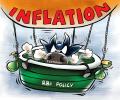
Analysts say RBI will cut rates because the liquidity crunch that began this time last year is still hurting the economy and also with an eye on the August industrial production numbers, which showed a contraction by 1.1 per cent -- the steepest in seven long years.
According to the global financial services major, since the last RBI policy meet, data suggest accelerating growth and surprisingly mild inflation, both at the core and headline level.
The Reserve Bank may announce cut in policy rates up to 50 basis points soon as inflation has been on way downward for past three successive weeks, bankers said.

India's consumer price index (CPI)-based retail inflation rate is likely to have cooled further in June, thus remaining below the 4 per cent target of the Reserve Bank of India (RBI) for a fifth consecutive month, giving the central bank wiggle room to focus on growth. Economists reckon that the decline is on account of easing prices in various categories of goods, especially food items, and a favourable base effect.
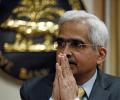
The Reserve Bank on Wednesday increased the benchmark lending rate by 40 basis points (bps) to 4.40 per cent in a bid to contain inflation, which has remained stubbornly above the target zone of 6 per cent for the last three months. The decision follows an unscheduled meeting of the Monetary Policy Committee (MPC), with all six members unanimously voting for a rate hike while maintaining the accommodative stance. While the inflation has remained above the targetted 6 per cent since January, RBI Governor Shaktikanta Das said the inflation print in April is also likely to be high.
In terms of magnitude of rate cuts, Morgan Stanley expects 50-100 basis points of policy rate cuts in 2015, depending on the inflation trajectory, which in turn will be dependent on the trend in commodity prices, fiscal deficit and rural wage growth.

Deputy Governor Michael Patra warned about the spillover effects of food inflation.

As COVID-19 infections spike in the country resulting in restrictions in various states and impacting the fragile recovery, many economists are expecting RBI to delay the policy normalisation move, which is expected in the February review. The country has reported a single-day rise of 58,097 new Covid-19 cases as of Wednesday morning--the highest in around 199 days -- of which 2,135 are Omicron cases and later in the day, the first confirmed Omicron-related death has also been reported. Maharashtra recorded the maximum number of 653 Omicron cases followed by Delhi at 464, Kerala 185, Rajasthan 174, Gujarat 154 and Tamil Nadu 121 cases, taking the total tally of cases to 3,50,18,358.

The bank, however, maintained that the incremental benefit from the MCLR based lending rates introduced in April 2016 as an alternative to the earlier system of base rate, was positive.
RBI expected to draw comfort from stable core inflation.
The Reserve Bank is expected to go for another rate hike of 0.40 per cent at the scheduled review of the monetary policy next week, a foreign brokerage said on Friday. The central bank's rate setting panel will follow it up with a 0.35 per cent hike in rates at the next review in August, or make it into a 0.50 per cent hike next week and a 0.25 per cent increase in August, to make the total quantum of rate hikes at 0.75 per cent, the report by Bofa Securities said. On May 4, the Reserve Bank of India (RBI) hiked rates by 0.40 per cent, and Governor Shaktikanta Das has already called a rate hike at the forthcoming review as a "no brainer" given the pressure to maintain its core mandate of inflation in the targeted band of under 6 per cent.

Maruti, IndusInd Bank, Bajaj Finserv, Eternal, Mahindra & Mahindra, Tata Steel, Kotak Mahindra Bank, Titan, HDFC Bank, and NTPC were among the other major gainers. Bharti Airtel and Sun Pharma were the laggards.

Financial services firm AnandRathi analysed the key points of the policy soon after it was announced.

Banks led the decline with Nifty Bank and BSE Bank index dropping over 3% each.
The declining inflation and a negative industrial outlook have strengthened the case for RBI.
Key risk for price rise is the 'deficient' monsoon that could lead to a pick-up in inflation expectations.

The repo rate or the short term lending rate was increased to 7.5 per cent from 7.25 per cent.

The highlights of the RBI's fourth monetary policy review of fiscal year 2022-23 announced by Governor Shaktikanta Das.
Headed by Urjit Patel, MPC for the fourth straight time kept the repo rate unchanged, at which it lends to the banks, at 6.25 per cent. The reverse repo, at which RBI borrows, will be 6 per cent.
According to the global financial services major, inflation may remain sticky, with a possible El Nino effect on the monsoon likely to push up food prices and geopolitical uncertainties seen pumping up global commodity rates.

Higher rural incomes, pay commission benefits, and lower interest rates are key positives: Analysts
